Facelift Recovery Timeline (Day-by-Day Guide) | Houston Facelift Expert
Medically Reviewed by Dr. Emmanuel De La Cruz, MD
Double Board-Certified Plastic Surgeon – Houston
Medically Reviewed by Dr. Emmanuel De La Cruz, MD
Double Board-Certified Plastic Surgeon – Houston
TMost patients are socially presentable within 10–14 days, but full facelift recovery time typically takes 3–6 months.
This is the short, evidence-based answer to the most common question patients ask:👉 how long is facelift recovery?
However, understanding how long facelift recovery takes requires recognizing that healing is not a single event—it is a progressive biologic process that unfolds over time.
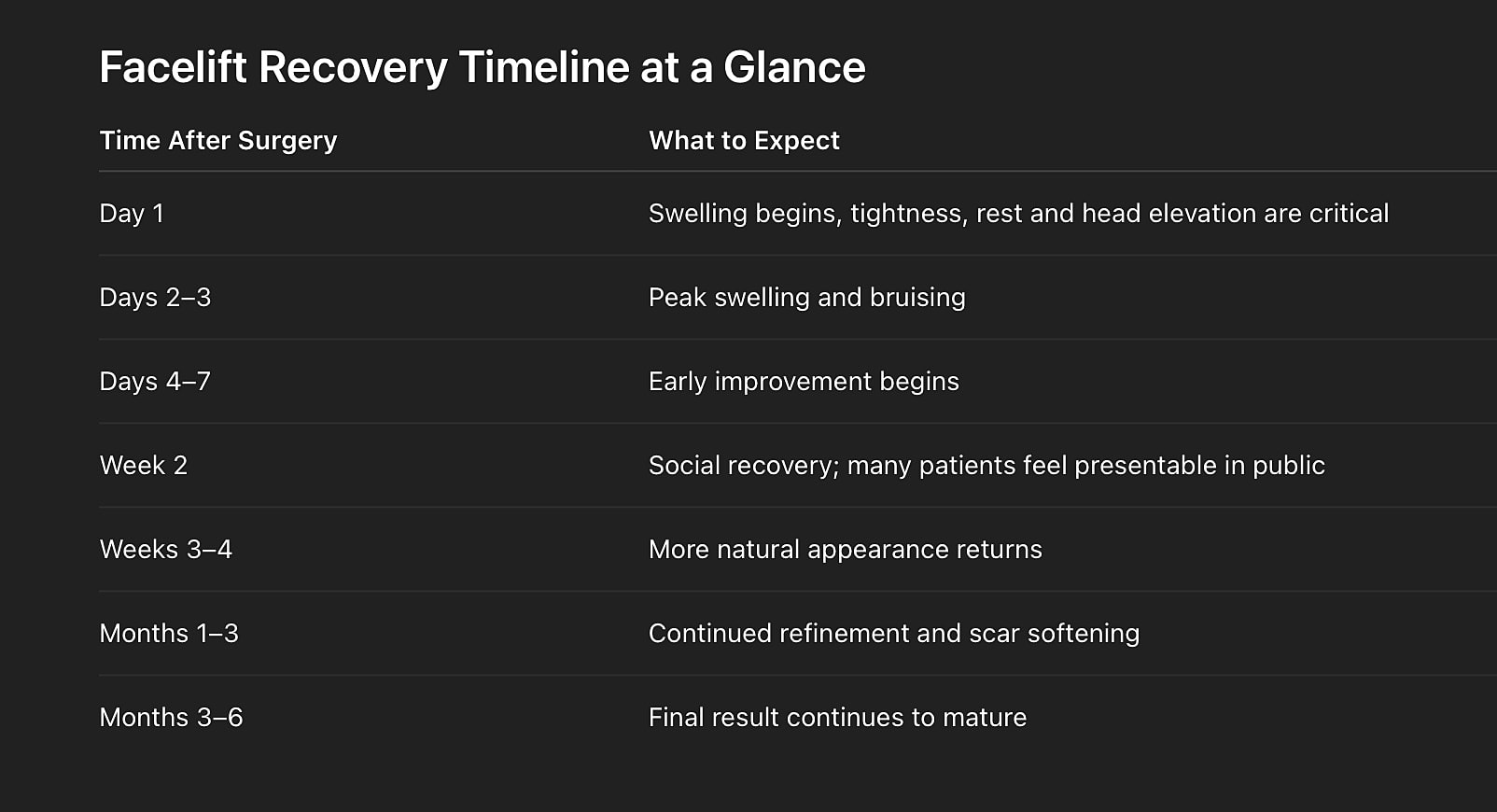
The facelift recovery timeline includes:
Even after patients feel comfortable returning to social activities, deeper healing continues beneath the surface.
1 of 2
How long is facelift recovery?
While most patients follow a general pattern, how long facelift recovery takes can vary from person to person. The overall facelift recovery time depends on factors such as surgical technique, individual healing response, and postoperative care.
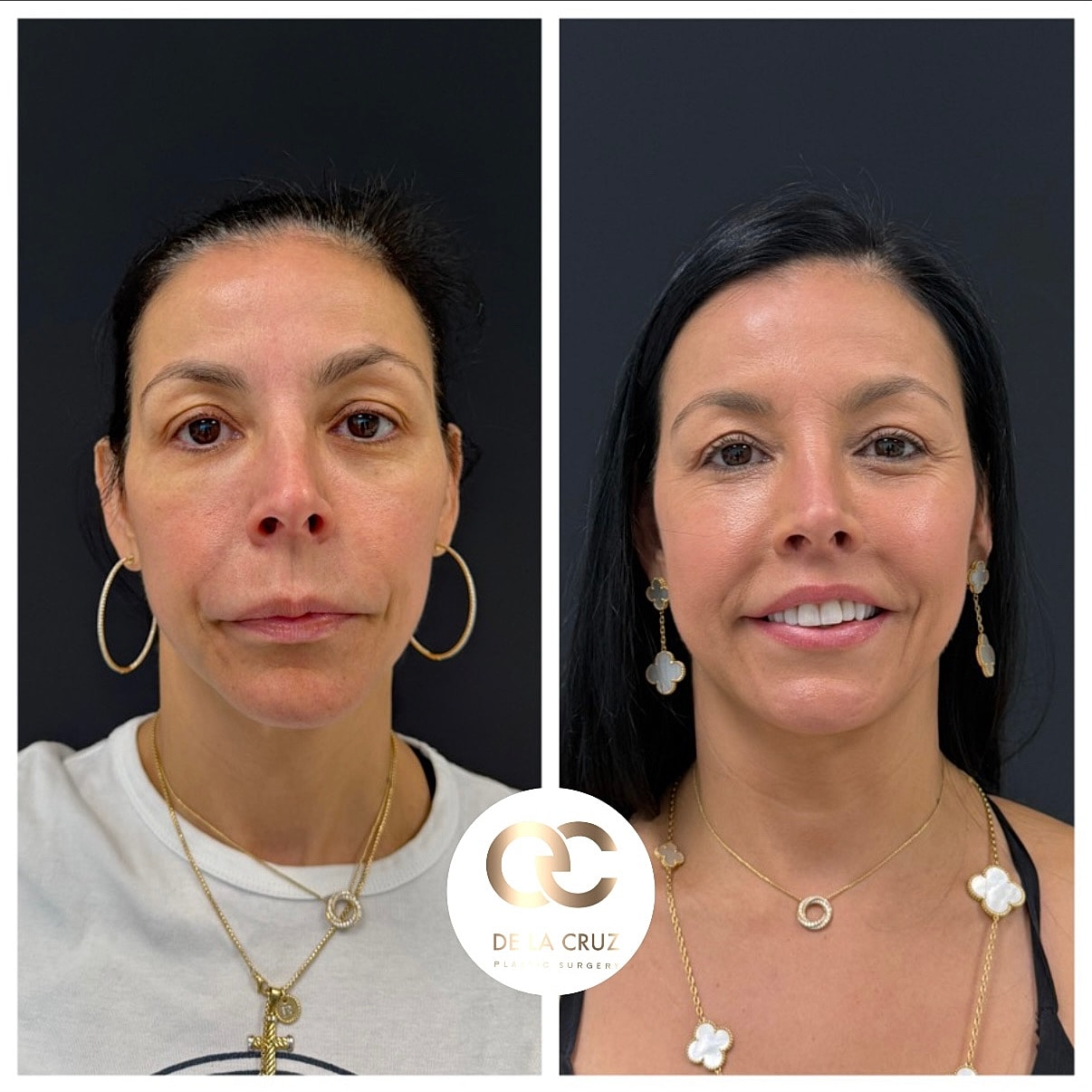
In general, most patients become socially presentable within 10–14 days, though how long facelift recovery is will differ slightly for each individual. Some patients recover more quickly, while others may take several weeks for swelling and bruising to fully resolve. Final results typically continue to improve over 3–6 months as tissues settle and the facelift swelling timeline progresses.
Understanding how long facelift recovery takes—and what influences it—allows you to:
The first 24 hours after facelift surgery are focused on rest, protection, and swelling control.
Patients commonly experience:
At this stage, the face often looks more swollen than patients expect. This is normal. It does not reflect the final result. In fact, the early postoperative appearance is often the least representative of the ultimate outcome.
What to Do
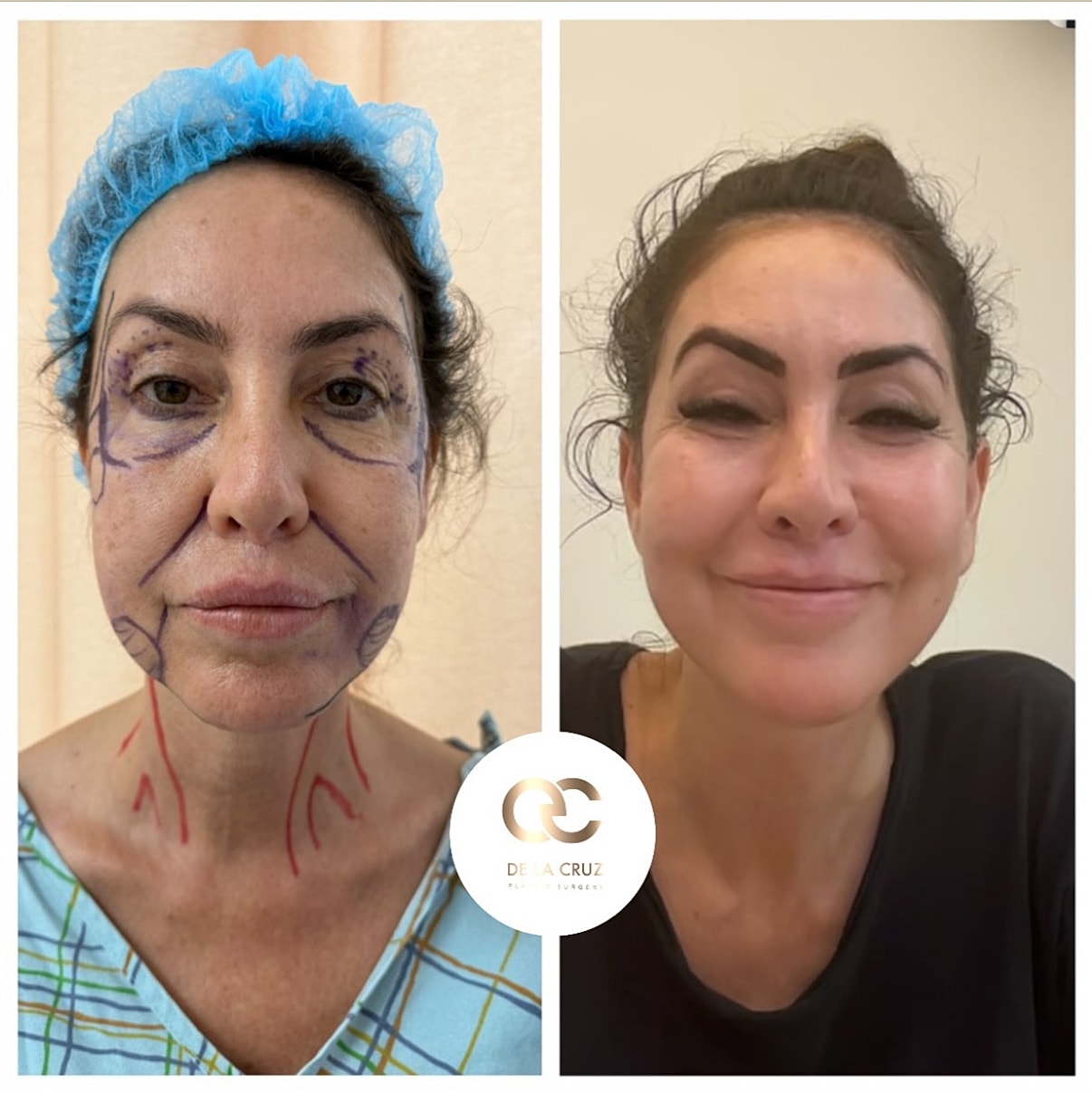
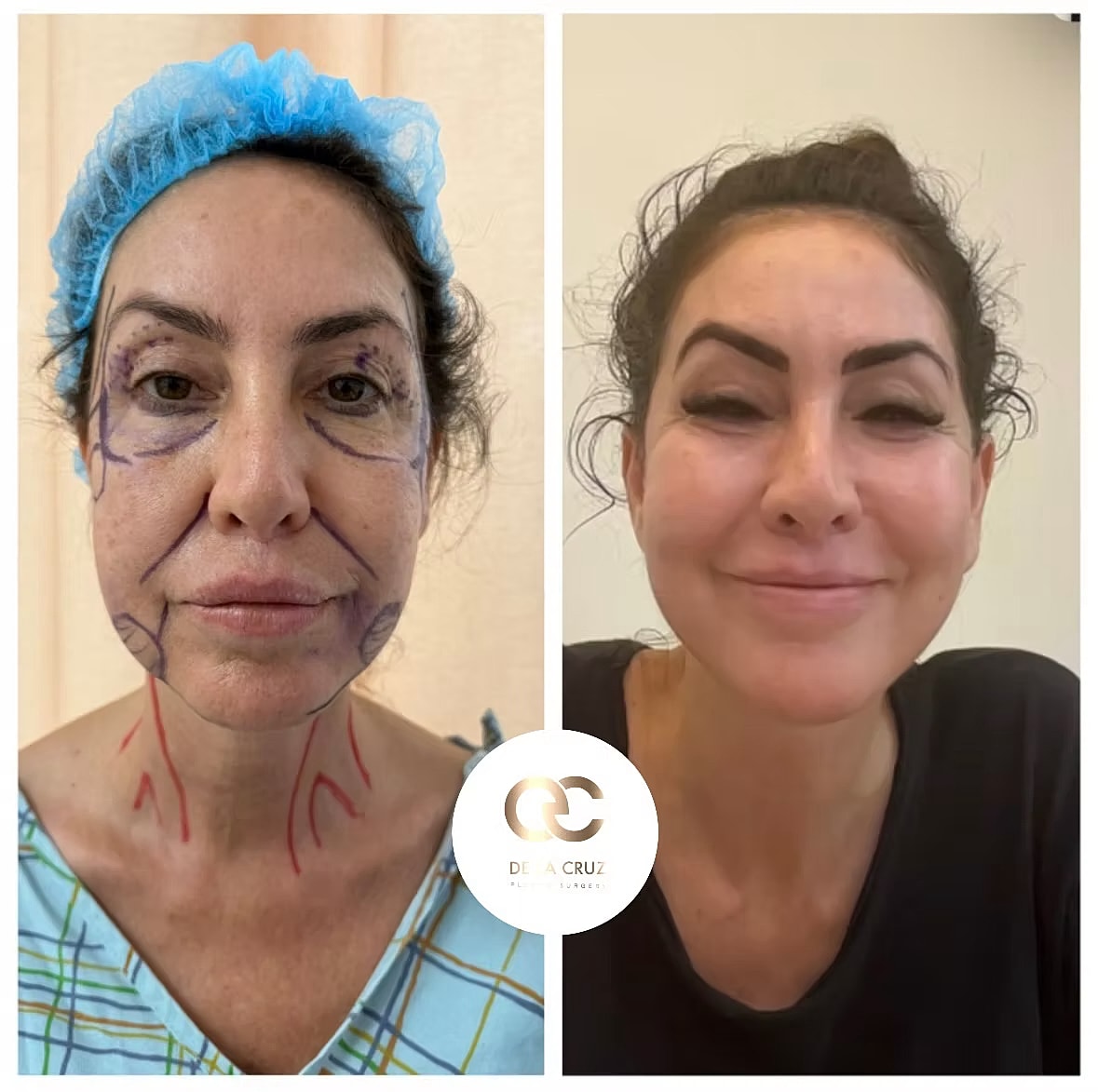
For many patients, this is the most difficult phase emotionally because swelling and bruising often become more noticeable before they begin to improve.
During this stage, patients may notice:
This phase is expected. It reflects normal postoperative inflammation, not failure of healing.
Important Reassurance
Many patients worry that they look worse than expected on day 2 or day 3. This is common. Early facelift recovery is often characterized by swelling that temporarily obscures the underlying improvement.
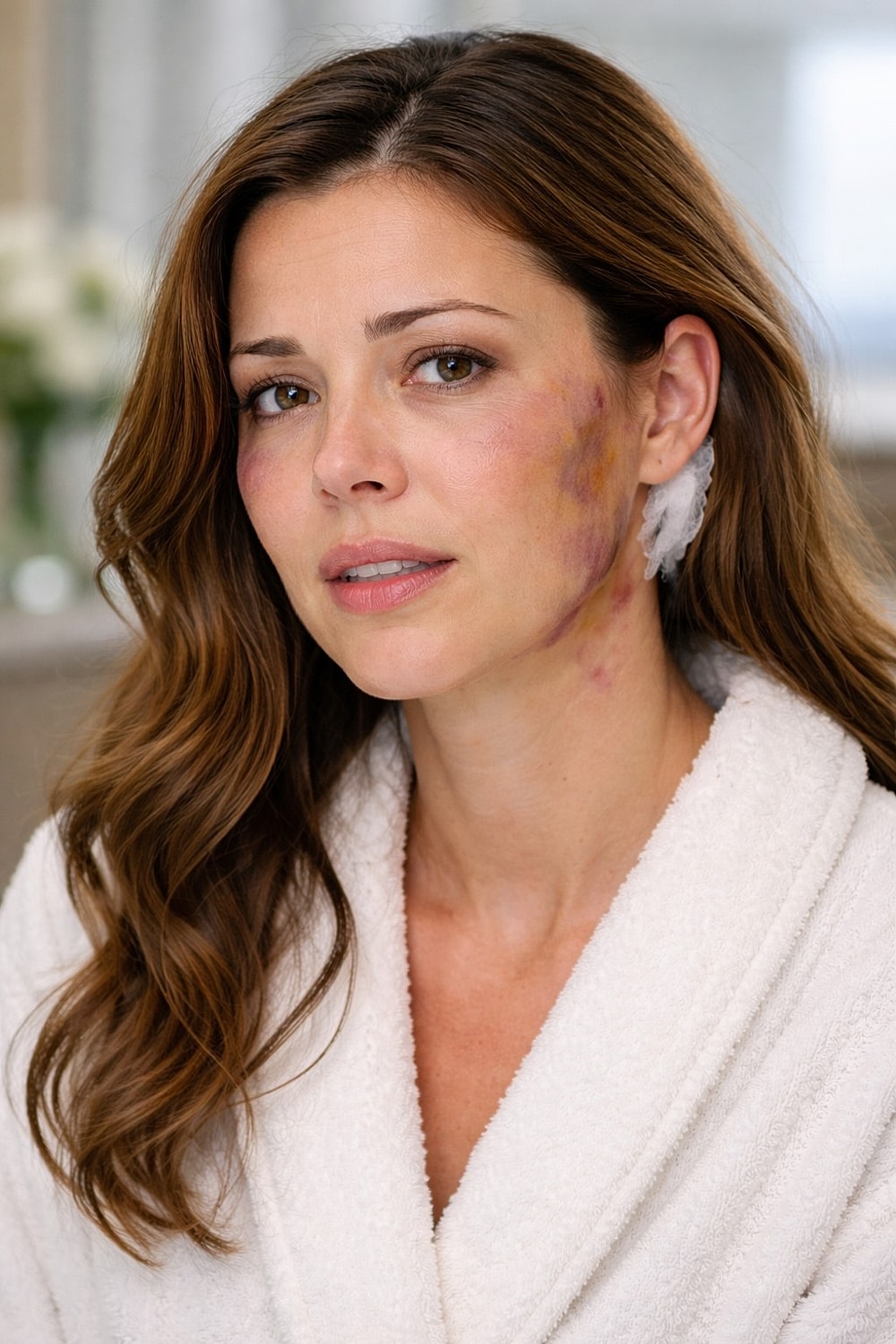
By the second half of the first week, swelling typically begins to decline. Bruising may start to change color, often transitioning from purple or blue to green or yellow.
Patients often notice:
Some sutures or dressings may be removed during this period, depending on the surgical plan.
What This Means

One of the most important milestones in the facelift recovery timeline is understanding when you will look normal after facelift surgery.
Most patients asking “when will I look normal after facelift” are referring to the point at which they feel comfortable returning to social activities without appearing noticeably surgical.
By approximately 10 to 14 days, many patients:
At this stage, many patients feel they are approaching normal. However, it is important to understand that when you look normal after a facelift does not mean healing is complete.
Residual swelling is still present—even if subtle—and continues to improve over time. This is a key part of the facelift swelling timeline, and it explains why results continue to refine after the initial recovery period.
So, when will you look normal after facelift surgery?
Most patients look socially presentable at around 2 weeks, but a fully natural, refined appearance continues to develop over the following several weeks to months as swelling resolves and tissues settle.

During weeks 3 and 4, the face usually begins to look much more natural. Swelling continues to improve, and facial expression becomes less tight.
At this point, patients often notice:
This is often the phase when friends and family say:
“You look refreshed.”
That is the ideal reaction. A well-performed facelift should not look exaggerated or overdone. It should look elegant, balanced, and natural.
This is the stage many patients underestimate.
Although most visible bruising and major swelling are gone, subtle healing continues beneath the surface. Scar tissue softens, deeper tissues settle, and the skin adapts more fully to its new position.
Patients may continue to notice:
When Will I See My Real Facelift Result?
Most patients see a strong early result within the first few weeks, but the more refined, elegant result usually becomes increasingly visible between 1 and 3 months.
By this stage, the face typically appears much more settled. Most residual swelling has resolved, incisions continue to mature, and the final result becomes clearer.
This period is characterized by:
Evidence-Based Strategies for Optimal Healing
Facelift recovery is not solely dependent on surgical technique—it is profoundly influenced by postoperative behavior and physiologic support.
While healing follows a predictable biologic course, patients who adhere to evidence-based recovery strategies can experience:
Below are the most impactful, medically supported interventions.


Why It Matters
After surgery, fluid accumulation (edema) is driven by gravity and inflammatory changes. Elevating the head reduces hydrostatic pressure, promoting venous and lymphatic drainage.
Clinical Impact
How to Do It Properly

Why It Matters
Compression garments help eliminate “dead space” between tissues, allowing the skin to re-drape smoothly over underlying structures.
Clinical Benefits
Important Considerations

Why It Matters
Nicotine causes vasoconstriction, reducing blood flow to healing tissues. In facelift surgery, where skin viability is critical, this can have serious consequences.
Clinical Risks of Nicotine Use
Evidence-Based Recommendation
Key Insight
This is one of the most important modifiable risk factors in facelift recovery.

Why It Matters
Healing requires protein for:
Clinical Benefits
Practical Recommendations
Advanced Insight
Protein deficiency—even mild—can delay healing and prolong swelling.

Why It Matters
The lymphatic system plays a central role in clearing postoperative fluid and inflammatory byproducts.
Clinical Benefits
Important Considerations
Hydration
Adequate fluid intake supports circulation and cellular repair.
Activity Modification
Sun Protection
UV exposure can worsen scars and prolong redness.
Medication Compliance
Take all prescribed medications exactly as directed.
Patients often assume facelift recovery is the same for everyone. It is not. Recovery speed and final outcome vary based on several important factors.
Surgical Technique
A deep plane facelift, SMAS facelift, mini facelift, and neck lift all have different recovery patterns. More advanced structural techniques may create more early swelling but often produce better long-term contour and more natural rejuvenation.
Skin Quality and Elasticity
Patients with stronger skin elasticity often heal with smoother redraping and more refined contour. Thin, sun-damaged, or less elastic skin may require more time for swelling to resolve and tissues to settle.
Patient Health and Age
Healing is influenced by circulation, nutrition, inflammation, and overall health. A healthy patient in their sixties may heal better than a younger patient with poor health habits.
Postoperative Compliance
Patients who follow instructions closely usually recover more smoothly. Head elevation, activity restrictions, incision care, and nicotine avoidance all matter.
Surgeon Expertise
Technique, precision, tissue handling, and judgment all influence recovery. A carefully performed facelift tends to result in less trauma, better healing, and a more natural appearance.
Surgical Technique: One of the Most Important Determinants of Facelift Recovery Time
The technique used during a facelift is one of the most significant factors influencing both facelift recovery time and the final aesthetic outcome.
Not all facelifts are performed the same. Differences in surgical approach can affect:
Deep Plane vs. Traditional (SMAS) vs. Ponytail Facelift (Endoscopic Facelift)
Deep Plane Facelift
Recovery Insight:May involve slightly more early swelling, but typically leads to more refined and natural long-term outcomes.
Traditional / SMAS Facelift
Recovery Insight: May have more visible early tightness and, in some cases, longer swelling duration depending on technique.
Ponytail Facelift (Endoscopic Facelift)
Recovery Insight:Because of smaller incisions and less tissue disruption, the ponytail facelift may offer:
However, it is best suited for select patients with early signs of aging, rather than more advanced facial laxity.
Skin is not merely a covering—it is a dynamic, biologic organ that determines how well results are expressed.
Key Factors
Clinical Implications
Patients with:
Advanced Insight
Skin with preserved elasticity adapts more efficiently to repositioned structures, leading to:
Healing is a systemic process—not just a local one.
Influential Variables
Clinical Impact
Key Principle
A healthy 60-year-old may heal better than an unhealthy 40-year-old.
4. Postoperative Compliance: The Patient’s Role in the Outcome
Even the most technically perfect facelift can be compromised by poor postoperative care.
Critical Behaviors
Clinical Reality
Patients who strictly follow postoperative instructions experience:
High-Impact Insight
Postoperative compliance is one of the most controllable—and most underestimated—factors in recovery.
Perhaps the most important variable is the surgeon performing the procedure.
What Defines Expertise
Clinical Impact
An experienced surgeon can:
Outcome Difference
The distinction is not subtle—it is often the difference between:
Precision. Experience. Natural Results.
Choosing a facelift surgeon is one of the most important decisions a patient will make. The difference is not simply in the procedure—it is in the judgment, technique, and artistry behind it.
At its highest level, a facelift should not look like surgery. It should look like you—refreshed, refined, and naturally rejuvenated.
Double Board Certification: A Higher Standard of Training
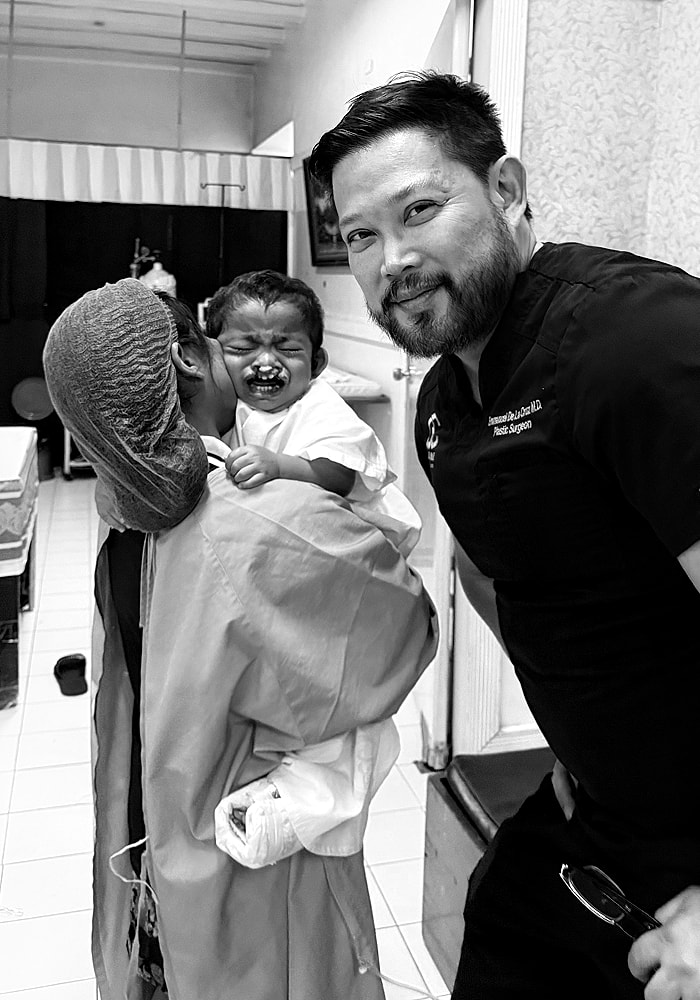
Dr. Emmanuel De La Cruz is double board-certified in both:
This distinction reflects:
In aesthetic surgery, where millimeters matter, depth of training translates directly into precision and outcomes.
Advanced Facelift Techniques: Beyond Traditional Methods
Not all facelifts are performed the same.
Dr. De La Cruz specializes in advanced techniques, including:
Why This Matters?
Modern techniques allow for:
The goal is not to “pull” the face—but to reposition underlying structures in a way that restores youthful anatomy.
A Reputation Built on Results and Trust
Patients choose Dr. De La Cruz not only for technical expertise—but for:
Facelift surgery is both science and artistry. Mastery requires both.
Modern facelift techniques are designed to:
The difference is not just in the result—but in how smoothly a patient arrives there.
About the Medical Reviewer Dr. Emmanuel De La Cruz is a double board-certified plastic surgeon specializing in advanced facial rejuvenation and body contouring procedures. 👉 [Learn more about Dr. Emmanuel De La Cruz]
Many patients feel reassured when they know what is normal during facelift healing.
Common symptoms include:
These symptoms often improve gradually over time.
Patients should contact their surgeon promptly if they experience:
A well-informed patient is safer and more confident during recovery.

Most visible swelling improves within 2–3 weeks, while subtle swelling may persist up to 3 months.
Most patients return to non-physical work within 10–14 days.
A socially natural appearance typically occurs by 2–3 weeks.
Final results are usually appreciated between 3–6 months.
Discomfort is typically mild to moderate and well controlled with prescribed medication.
Initial healing occurs over the first few weeks, but complete healing and refinement can continue for 3 to 6 months
Yes. Nicotine significantly impairs blood flow and increases the risk of healing problems, poor scars, and skin compromise.
Following postoperative instructions carefully, keeping the head elevated, avoiding nicotine, eating adequate protein, and attending follow-up visits all help optimize recovery.
Yes. Swelling typically peaks around day 2–3, which is often the worst point before improvement begins.
Yes. Tightness is a common and expected part of healing and improves gradually over several weeks.
Temporary asymmetry is usually caused by uneven swelling and typically resolves as healing progresses.
Yes. Bruising is expected and typically improves within 1–2 weeks.
Yes. Temporary numbness around the ears, cheeks, or neck is common and gradually improves over time.
Residual swelling can persist for several weeks to months and is part of the normal healing process.
Initial healing occurs in a few weeks, but scars continue to mature and fade over several months to a year.
Head elevation, compression (if recommended), steroids (prescription), bromelein, hydration, and lymphatic drainage can help reduce swelling.
Light activity may begin at 2 weeks, while full exercise is typically resumed at 6-8 weeks.
Most patients can wash their hair within a few days, depending on surgeon instructions.
About the Author
Dr. Emmanuel De La Cruz, MD is a double board-certified plastic surgeon in Houston, Texas, certified by the American Board of Plastic Surgery and the American Board of Surgery. He specializes in advanced facial rejuvenation procedures, including deep plane facelift, ponytail facelift (endoscopic facelift), neck lift, eyelid surgery, and facial fat transfer.
He has trained with internationally recognized leaders in facial surgery, including Chia Chi Kao in Beverly Hills and Giovanni Botti in Italy, allowing him to offer both minimally invasive and structural facelift techniques tailored to each patient.
In addition to his surgical expertise, Dr. De La Cruz is a portrait sculptor and painter, bringing an artistic understanding of facial balance, proportion, and harmony to his work. His approach focuses on achieving natural, refined, and undetectable results in facial rejuvenation.