(832) 776-1134 Schedule a Consultation

Deep Plane Facelift in Houston

True facial rejuvenation requires a surgical approach that honors the intricate architecture of the face. Dr. De La Cruz utilizes the advanced deep plane facelift technique to provide a rested appearance that looks entirely natural and feels like a return to your true self.

Portrait of a woman with wavy red hair.

Deep Plane Facelift in Houston

The Gold Standard of Facial Renewal

A deep plane facelift is considered the gold standard in modern facial rejuvenation, offering natural-looking, long-lasting results that go beyond traditional facelift techniques. Unlike procedures that simply tighten the skin, the deep plane facelift repositions the deeper facial structures, restoring youthful contours of the cheeks, jawline, and neck. At De La Cruz Plastic Surgery in Houston, double board-certified plastic surgeon Dr. Emmanuel De La Cruz performs advanced deep plane facelift surgery with meticulous anatomical precision. By releasing key facial ligaments and elevating the deeper tissues as a unified layer, he restores facial harmony and definition while preserving natural expression and movement.

Purpose

Addresses midface sagging, deep nasolabial folds, and jowls by repositioning the deeper facial structures to restore youthful contours and natural facial definition.

Downtime

Most patients return to social activities within 10–14 days as swelling and bruising improve during the early stages of deep plane facelift recovery.

Duration

The procedure typically takes 4–5 hours and is performed under general anesthesia or monitored anesthesia care (MAC) sedation administered by a board-certified anesthesiologist.

Longevity

Deep plane facelift results often last 10–15 years, significantly longer than those achieved with a traditional SMAS facelift.

A Surgeon with the Eye of an Artist

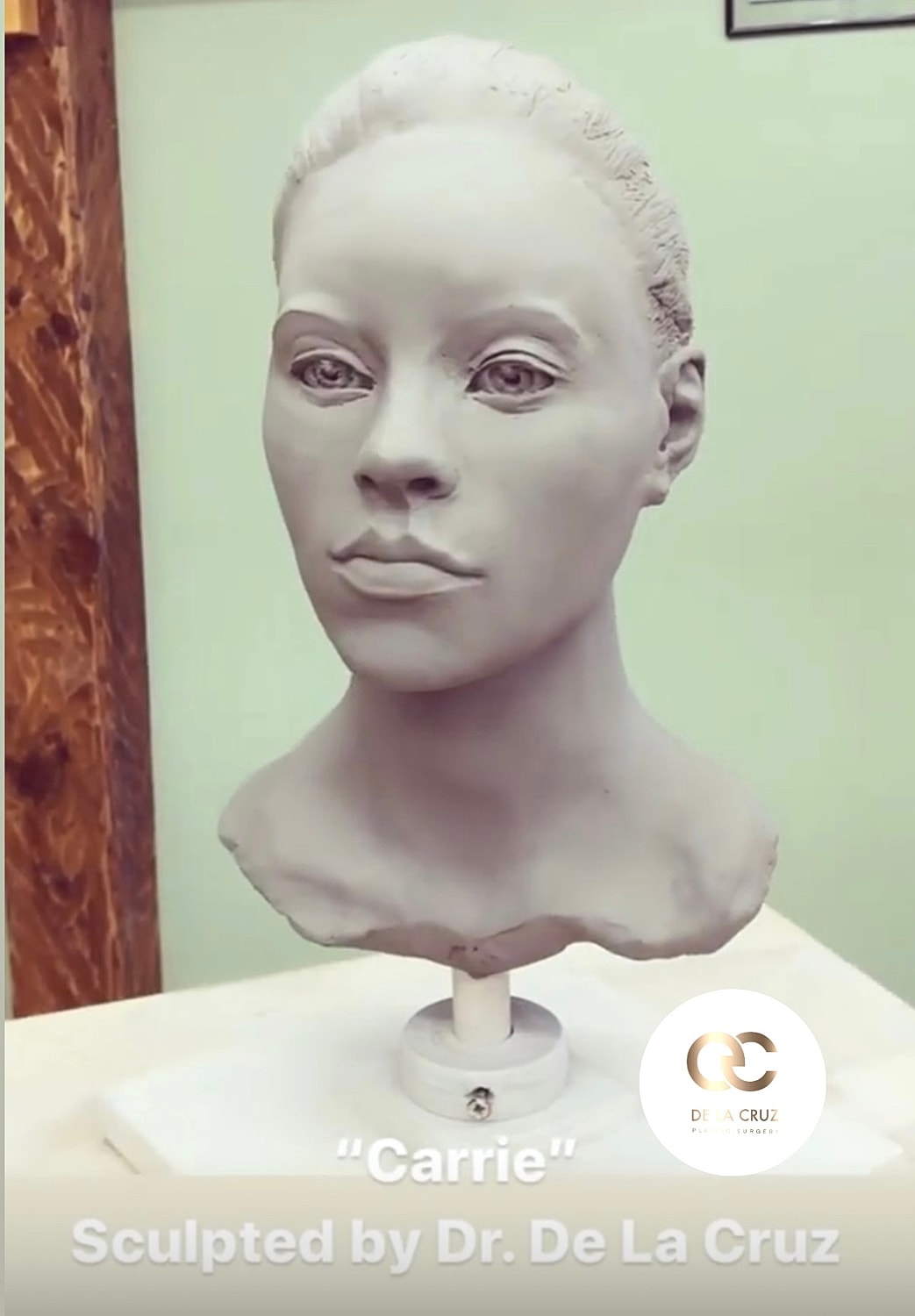
Dr. Emmanuel De La Cruz is not only a double board-certified plastic surgeon—he is a trained artist.

  • A painter and sculptor with a refined understanding of form, light, and shadow
  • Personally trained by world-renowned French sculptor Philippe Faraut
  • Experienced in analyzing the subtle contours and proportions that define the human face

This background provides something most surgeons do not possess:

👉 An intuitive understanding of beauty at its most fundamental level

portrait sculpture by Dr. Emmanuel De La Cruz Houston Facelift Plastic Surgeon
De La Cruz Logo

What Is a Deep Plane Facelift?

Deep Restoration for Lasting Radiance

A deep plane facelift is one of the most advanced facial rejuvenation procedures available, designed to correct the deeper structural causes of facial aging. Unlike traditional facelift techniques that mainly tighten the skin and superficial musculoaponeurotic system (SMAS), the deep plane facelift repositions the deeper facial tissues as a single unit. By releasing key retaining ligaments, the surgeon can elevate the midface, soften deep nasolabial folds, and redefine the jawline and neck. At De La Cruz Plastic Surgery in Houston, double board-certified plastic surgeon Dr. Emmanuel De La Cruz performs deep plane facelift surgery with meticulous attention to facial anatomy, restoring youthful contours while maintaining natural expression and long-lasting results.

A deep plane facelift in Houston is frequently combined with other facial rejuvenation procedures to create a more complete and natural restoration of youthful facial contours. At De La Cruz Plastic Surgery in Houston, Dr. Emmanuel De La Cruz often combines facelift surgery with complementary procedures to address aging of the face, eyes, lips, and neck simultaneously.

Common procedures performed with a deep plane facelift include a neck lift, which tightens loose neck skin and platysma bands to restore a sharper, more defined jawline, and an upper lip lift, which shortens the distance between the nose and upper lip to create a more youthful and balanced smile. Facial fat grafting may also be performed to restore natural volume to the cheeks, temples, and under-eye areas, helping to soften hollows that develop with age.

Additional procedures may include buccal fat removal to refine fullness in the lower cheeks, an endoscopic brow lift (similar to the Ponytail Lift technique) to elevate the brows and rejuvenate the upper face, and upper and lower eyelid surgery (blepharoplasty) to correct excess eyelid skin and under-eye puffiness. When performed together, these procedures provide a more comprehensive facial rejuvenation surgery in Houston, restoring harmony between the eyes, cheeks, jawline, and neck.

Because the deep plane facelift lifts the deeper facial structures rather than simply tightening the skin, the result avoids the “windswept” appearance associated with older facelift techniques. Instead, patients achieve a natural, refreshed look with preserved facial expression and long-lasting facial rejuvenation.

Woman in black blazer touching her hair.

What Is the Deep Plane Facelift Procedure Like?

Designed for Natural Movement

On the day of your deep plane facelift surgery in Houston Texas, you will be cared for in our accredited ambulatory surgery facility in Houston. The procedure is typically performed under general anesthesia administered by a board-certified anesthesiologist to ensure your comfort and safety throughout surgery. In select cases, monitored anesthesia care (MAC) with intravenous sedation may be used depending on the patient’s medical profile and surgical plan. Dr. Emmanuel De La Cruz makes carefully placed incisions that are discreetly hidden within the natural contours around the ears and along the hairline, allowing scars to remain virtually inconspicuous once healed.

The facial tissues are then elevated in the deep plane beneath the SMAS layer, allowing the surgeon to reposition the underlying facial muscles and fat pads to their more youthful position. This advanced technique restores midface volume, softens deep folds, and improves jawline definition. The platysma muscle in the neck may also be tightened to address neck laxity and enhance overall contour. Once the deeper structures are secured with internal sutures, excess skin is carefully trimmed and the incisions are closed with meticulous precision to promote smooth healing and minimal scarring.

Blank dark background with no visible elements.

What Conditions Does a Deep Plane Facelift Address?

From Midface to Neckline

The deep plane facelift in Houston is designed to correct the most visible signs of aging in the lower two-thirds of the face and neck, restoring youthful contours and facial harmony. At De La Cruz Plastic Surgery in Houston, this advanced facial rejuvenation procedure addresses:

Sagging cheeks and loss of volume in the midface

Deep nasolabial folds (smile lines) and marionette lines around the mouth

Jowls and diminished jawline definition

Loose neck skin, including the appearance of a “turkey neck” or vertical platysmal bands

Deep facial folds and hollowness caused by the downward migration of facial soft tissues

By repositioning the deeper facial structures rather than simply tightening the skin, the deep plane facelift performed by Dr. Emmanuel De La Cruz in Houston restores natural facial balance and produces long-lasting, natural-looking facial rejuvenation.

What Are the Benefits of a Deep Plane Facelift?

Highlight Your Natural Beauty

Natural, Unoperated Appearance

Because the deep plane facelift repositions the underlying facial structures rather than tightening the skin alone, the final result appears remarkably natural. By releasing key retaining ligaments and elevating the deeper tissues as a unified layer, tension is removed from the skin surface. This allows the face to heal without the overly tight or “windswept” appearance sometimes associated with traditional facelift techniques. The result is a refreshed, youthful appearance that preserves the patient’s natural facial expression and individual identity.

Comprehensive Facial Rejuvenation

The deep plane technique provides simultaneous rejuvenation of the midface, jawline, and neck. By elevating the deeper facial tissues, Dr. Emmanuel De La Cruz restores youthful cheek contours, softens deep folds, and redefines the jawline. When combined with refinement of the platysma muscle in the neck, this approach creates a harmonious transition between the face and neck, producing balanced and anatomically natural rejuvenation.

Long-Lasting Structural Repositioning

A deep plane facelift provides a more durable correction than many traditional facelift approaches. Because the underlying facial structures are repositioned and tension is placed on the deeper anatomical layers rather than the skin, the results tend to maintain their integrity over time. In many patients, the improvement achieved with a deep plane facelift can last 10–15 years or longer, often exceeding the longevity of a standard SMAS facelift.

De La Cruz Logo

Am I a Candidate for a Deep Plane Facelift ?

The Best Version of You

Many patients ask who is a candidate for a deep plane facelift in Houston. The ideal candidate is someone experiencing visible signs of facial aging, including sagging cheeks, deep nasolabial folds, jowls, and neck laxity. While many patients seeking facelift surgery are in their 50s or 60s, younger individuals in their 40s are increasingly choosing this advanced facial rejuvenation procedure to address early volume loss and slow progressive facial descent.

Candidates should be in good overall health, maintain realistic expectations, and provide a complete medical history. During your consultation at De La Cruz Plastic Surgery in Houston, Dr. Emmanuel De La Cruz, a double board-certified plastic surgeon, performs a comprehensive facial evaluation to assess skin quality, facial structure, and the degree of tissue descent. This personalized assessment helps determine whether a deep plane facelift is the most appropriate procedure to restore natural facial contours and achieve long-lasting facial rejuvenation.

Woman in black sweater, serious expression, natural light.

Deep Plane Facelift Recovery Timeline in Houston

Returning to Life, Confidently

The recovery process following a deep plane facelift in Houston is typically smoother than many patients expect. While some swelling and bruising are normal during the early stages of healing, most discomfort is mild and can usually be managed with prescribed pain medication for the first few days. Keeping the head elevated, even while sleeping, helps reduce swelling and promotes optimal healing. Dr. Emmanuel De La Cruz and his medical team will monitor your recovery closely through scheduled follow-up visits to ensure your results progress safely and naturally.

First 3–5 Days

During the first few days after surgery, patients may experience swelling, bruising, and mild tightness in the face and neck. Cold compresses and head elevation help reduce swelling. Most patients require prescription pain medication only during this early phase.

Week 1

Swelling and bruising begin to gradually improve. Sutures are typically removed around this time, and many patients begin to feel more comfortable moving around and performing light daily activities.

10–14 Days

Most patients feel comfortable returning to social activities within two weeks. Any remaining bruising can usually be concealed with makeup, while residual swelling continues to improve.

Weeks 3–4

Facial swelling continues to resolve, and the jawline and neck contour become more defined. Patients can gradually resume light exercise, though strenuous activity should still be avoided.

6–12 Weeks

The majority of swelling has subsided, revealing a natural, refreshed facial appearance. Incisions continue to fade into the natural creases around the ears and hairline.

3–6 Months

Final results become fully visible as the tissues settle and the skin continues to heal. The face appears naturally rejuvenated, with restored contours and improved jawline definition.

Recovery timelines vary among individuals depending on skin quality, healing response, and the extent of surgery.


Solid dark background with no visible details.

Deep Plane Facelift Results

Youthful Contours, Authentically Yours

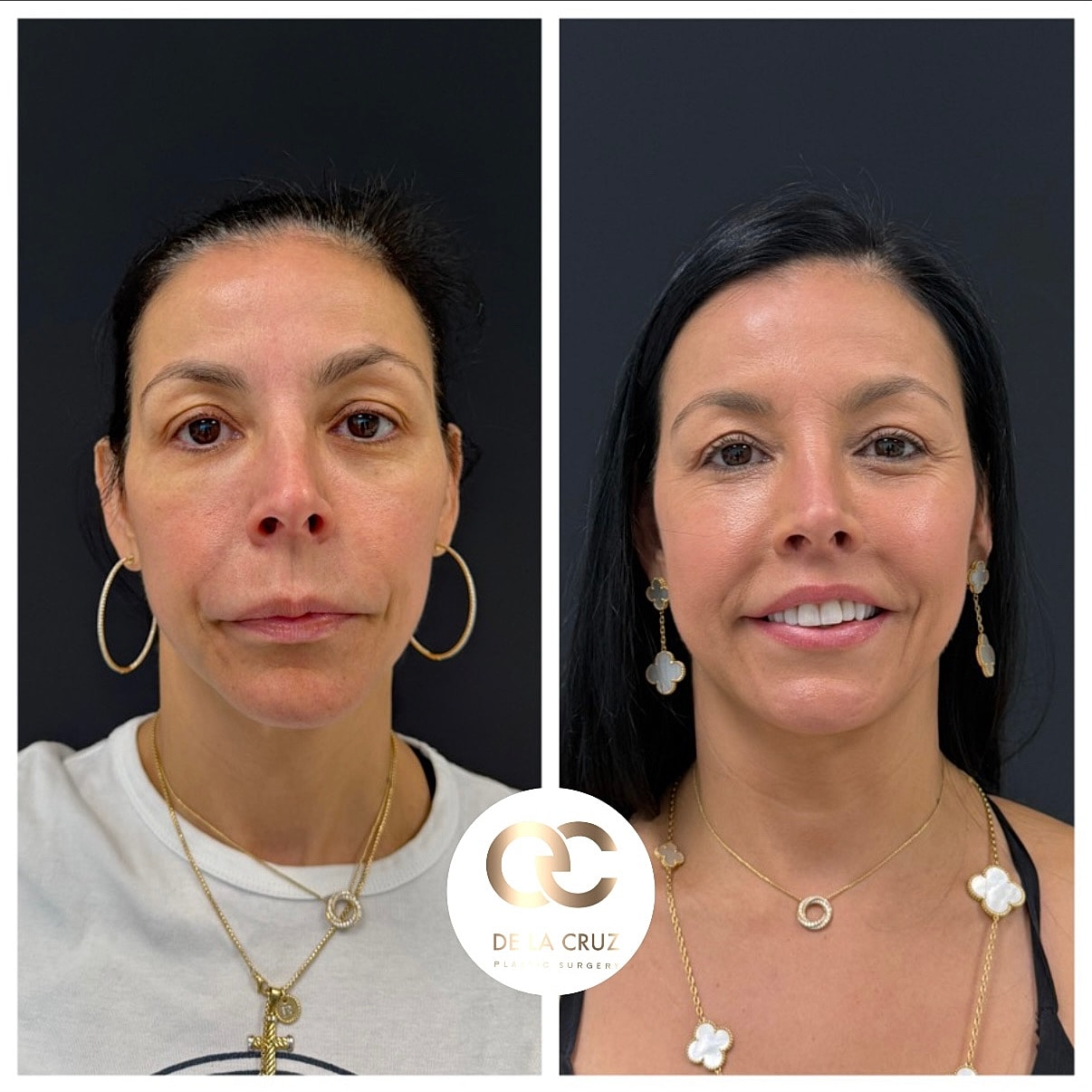
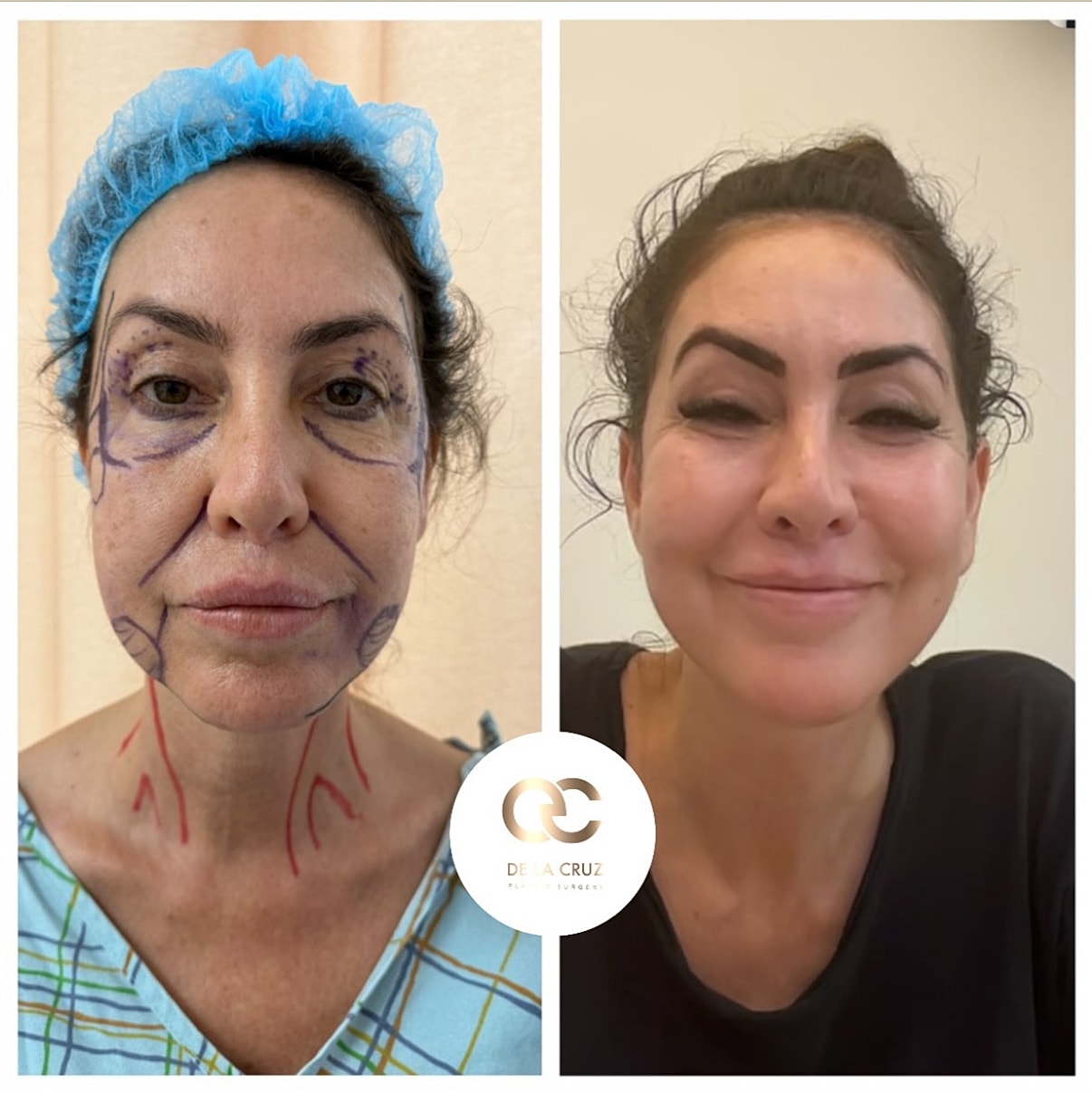
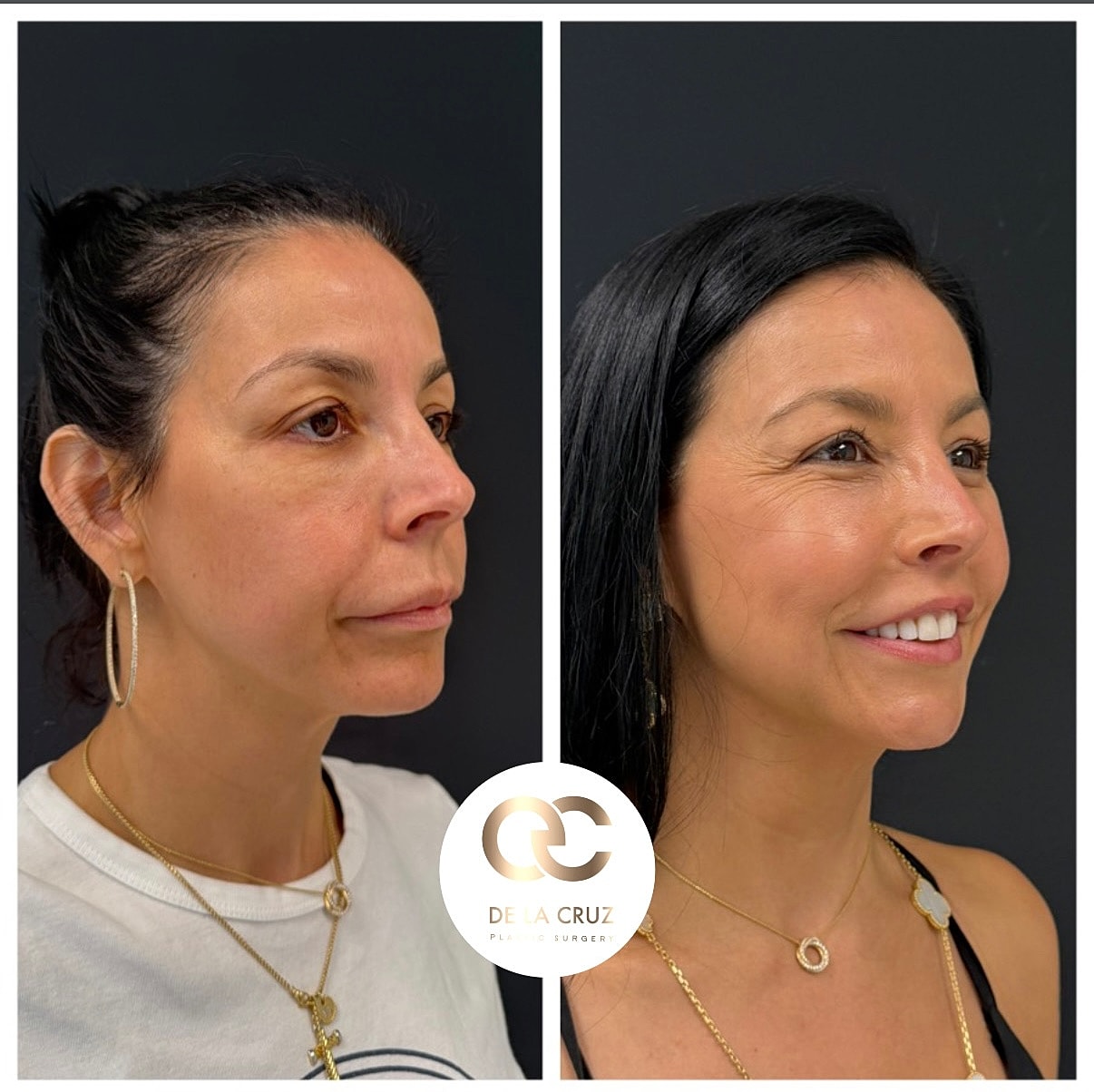
The final results of a deep plane facelift gradually emerge as swelling continues to resolve, typically becoming fully apparent within 3 to 6 months after surgery. As the tissues settle, patients often notice a dramatic restoration of youthful facial contours, including a defined jawline, elevated cheeks, and smoother facial transitions. Because the deep plane technique repositions the underlying facial structures rather than tightening the skin alone, the outcome appears natural, balanced, and free of the overly tight look associated with older facelift techniques.

The results of a deep plane facelift are designed to be long-lasting. While the face will continue to age naturally over time, patients typically maintain a more youthful appearance for many years and often look significantly younger than they would have without surgery. Beyond the physical transformation, many patients experience renewed confidence as their refreshed appearance more closely reflects how vibrant and energetic they feel.

At De La Cruz Plastic Surgery in Houston, Dr. Emmanuel De La Cruz performs advanced deep plane facelift surgery in Houston Texas designed to restore natural facial contours.

How Long Do Deep Plane Facelift Results Last?

Long-Lasting Facial Rejuvenation That Can Last 10–15 Years

A deep plane facelift in Houston is designed to provide long-lasting facial rejuvenation by lifting and repositioning the deeper facial structures rather than simply tightening the skin. By releasing and elevating the SMAS layer and underlying facial tissues, the face is restored in a more natural, anatomical way.

In most patients, the results of a deep plane facelift typically last 10 to 15 years, making it one of the most durable facelift techniques available. While the procedure can significantly rejuvenate the face, it does not stop the natural aging process. Over time, the face will continue to age gradually due to factors such as genetics, sun exposure, and skin quality.

Patients who undergo a deep plane facelift in Houston with Dr. Emmanuel De La Cruz often maintain their results longer by following a comprehensive facial rejuvenation plan that may include medical-grade skincare, laser resurfacing, or other treatments that support skin quality and collagen production.

Individual results vary, but the deep plane technique remains one of the most effective procedures for achieving long-lasting, natural facial rejuvenation in Houston.

Why Choose De La Cruz Plastic Surgery for Your Deep Plane Facelift ?

Dedicated to Your Most Confident Self

Selecting the right surgeon for a deep plane facelift requires more than technical proficiency—it demands a deep understanding of facial anatomy, aesthetic balance, and surgical precision. Dr. Emmanuel De La Cruz, a double board-certified plastic surgeon in Houston, has pursued advanced training with some of the world’s leading innovators in facial rejuvenation. His mentorship includes renowned facelift surgeons such as Giovanni Botti, a pioneer of modern deep plane techniques; Andrew Jacono, internationally recognized for deep plane facelift surgery; Chia Chi Kao, developer of the Ponytail Lift; and Suleyman Tas, known for advanced facial aesthetic surgery.

Beyond surgical training, Dr. De La Cruz approaches facial rejuvenation with the eye of a classical artist. He is a portrait sculptor trained by world-renowned French master sculptor Philippe Faraut, an experience that profoundly shapes his understanding of facial proportions, light, and three-dimensional form. This unique blend of surgical mastery and sculptural artistry allows him to create facelift results that appear refined, balanced, and authentically natural.

At De La Cruz Plastic Surgery in Houston, every deep plane facelift is performed with meticulous attention to anatomy, safety, and individualized aesthetic goals. Patients benefit from a surgeon-led experience in an accredited surgical facility, where advanced techniques, thoughtful planning, and compassionate care come together to deliver long-lasting, natural-looking facial rejuvenation.

Deep Plane Facelift Frequently Asked Questions (FAQ)

A traditional SMAS facelift tightens the superficial musculoaponeurotic system (SMAS) and the skin as separate layers, which can place tension on the skin surface. In contrast, a true deep plane facelift releases the retaining ligaments and lifts the deeper facial tissues beneath the SMAS as a single unit. By repositioning the underlying muscles and fat pads rather than tightening the skin alone, the deep plane technique produces more natural-looking, longer-lasting facial rejuvenation with smoother transitions in the midface, jawline, and neck.

The Ponytail Lift and the Deep Plane Facelift are both advanced facial rejuvenation procedures, but they are designed to address different stages of facial aging and achieve different goals.

A Ponytail Lift is a minimally invasive procedure that focuses on lifting the upper and midface using smaller incisions typically hidden within the hairline. It is designed to elevate the brows, cheeks, and temples, creating a subtle, refreshed appearance similar to the natural lift that occurs when the hair is pulled back into a ponytail. This technique is often ideal for younger patients in their 30s or 40s who are experiencing early signs of facial descent but do not yet have significant skin laxity or jowling.

In contrast, a Deep Plane Facelift is a more comprehensive facial rejuvenation procedure that addresses moderate to advanced signs of aging in the midface, jawline, and neck. Rather than simply tightening the skin, the deep plane technique releases retaining ligaments and repositions the deeper facial tissues beneath the SMAS layer. This allows the surgeon to restore youthful contours, soften deep folds, improve jowls, and redefine the neck while maintaining a natural appearance.

At De La Cruz Plastic Surgery in Houston, Dr. Emmanuel De La Cruz performs both procedures and carefully evaluates each patient’s facial anatomy, degree of aging, and aesthetic goals during consultation to determine which technique will produce the most natural and long-lasting result.

While any surgical procedure carries potential risks, facial nerve injury during a deep plane facelift is extremely rare when the operation is performed by a surgeon with a deep understanding of facial anatomy. Dr. Emmanuel De La Cruz approaches facelift surgery with exceptional precision, drawing on his background as a formally trained hand and microsurgeon, where he routinely worked with delicate nerves and microsurgical structures. This experience provides an advanced understanding of nerve anatomy and careful tissue handling.

In addition, Dr. De La Cruz has participated in numerous advanced cadaveric facial dissections, allowing him to study the intricate pathways of the facial nerve, retaining ligaments, and soft tissues in extraordinary detail. During every deep plane facelift, meticulous surgical technique and constant attention to anatomical landmarks are used to protect the facial nerve and surrounding structures, ensuring the highest standards of safety and precision.

Common procedures that may be combined with a deep plane facelift include:

Combining procedures allows Dr. Emmanuel De La Cruz to perform comprehensive facial rejuvenation, addressing aging of the face, eyes, lips, and neck in a single surgical plan. At De La Cruz Plastic Surgery in Houston, this customized approach produces balanced, natural-looking results while minimizing overall recovery time.

While traditional facelift techniques may require a revision or touch-up after 5 to 7 years, the results of a deep plane facelift often last 10 to 15 years or longer. Because this technique repositions the deeper facial structures rather than simply tightening the skin, the lift is more structurally stable and provides long-lasting, natural facial rejuvenation.

There is no single “best” age for a deep plane facelift. The ideal timing depends on when an individual begins to notice significant signs of facial aging—such as sagging cheeks, jowls, or neck laxity—that they wish to correct. Many patients pursue facelift surgery in their 40s and 50s to address early tissue descent, while others achieve excellent results in their 60s and 70s when aging changes become more pronounced. During a consultation, the decision is guided not only by age but also by skin quality, facial anatomy, and overall health to ensure the most natural and long-lasting outcome.

One of the most common concerns patients have about facelift surgery is appearing overly tight or unnatural. With a deep plane facelift, this outcome is specifically avoided. Unlike older facelift techniques that primarily tightened the skin, the deep plane approach lifts and repositions the deeper facial tissues beneath the SMAS layer as a unified structure. Because the skin is not placed under excessive tension, the face heals with soft, natural contours and preserved facial expression.

At De La Cruz Plastic Surgery in Houston, Dr. Emmanuel De La Cruz focuses on restoring youthful anatomy rather than simply tightening the surface of the skin. By carefully releasing retaining ligaments and repositioning the deeper tissues, the procedure recreates natural facial volume and definition in the cheeks, jawline, and neck. The goal is not to make you look different, but to help you look refreshed, rested, and naturally rejuvenated—as though time has been gently turned back rather than surgically altered.

Deep plane facelift incisions are designed to be well concealed and minimally visible once healed. During the procedure, Dr. Emmanuel De La Cruz carefully places the incisions within the natural creases around the ear and along the hairline, where they blend naturally with the surrounding skin. This strategic placement allows the scars to remain discreet and difficult to detect, even when the hair is worn up.

In the early stages of healing, the incisions may appear slightly pink or firm, which is a normal part of the recovery process. Over the following months, these scars typically fade significantly and soften, becoming much less noticeable. With proper aftercare, sun protection, and adherence to postoperative instructions, most patients find that their facelift scars become nearly imperceptible within natural facial contours.

After a deep plane facelift, it is important to allow the tissues time to heal before resuming physical activity. Most patients can begin light walking within the first week, which helps promote healthy circulation and reduce swelling. However, more strenuous activities such as running, weight training, or high-intensity workouts should be avoided for approximately 4 to 6 weeks.

During the early recovery period, increased heart rate and blood pressure can contribute to swelling or bruising, so gradual progression is essential. Around 2 to 3 weeks after surgery, patients may begin light, low-impact exercise as swelling continues to improve. By 4 to 6 weeks, most individuals can safely return to their normal fitness routine, provided healing is progressing well.

Dr. Emmanuel De La Cruz will provide personalized guidance during your follow-up visits to ensure that exercise is resumed safely and at the appropriate time for your recovery.

Most patients are pleasantly surprised that a deep plane facelift is not as painful as they anticipated. While some swelling, tightness, and mild discomfort are normal during the first few days after surgery, significant pain is uncommon. Many patients describe the sensation as pressure or soreness rather than sharp pain, and discomfort typically improves quickly during the early recovery period.

At De La Cruz Plastic Surgery in Houston, Dr. Emmanuel De La Cruz employs several advanced strategies to minimize postoperative discomfort. During surgery, tumescent anesthesia is used to help reduce bleeding and provide extended local numbing of the tissues. In addition, Dr. De La Cruz incorporates modern non-opioid pain management protocols, including medications such as Journavx, to help control pain while reducing the need for traditional opioid medications.

These multimodal pain-control techniques allow most patients to recover comfortably, with many requiring only minimal pain medication for the first few days after surgery.

Both deep plane facelifts and traditional facelift techniques can be performed safely when carried out by an experienced, board-certified plastic surgeon. The overall safety of the procedure depends more on the surgeon’s expertise, surgical technique, and adherence to modern safety protocols than on the specific facelift method used.

A deep plane facelift differs from traditional techniques because it lifts the deeper facial tissues as a single unit beneath the SMAS layer rather than tightening the skin alone. When performed correctly, this approach can reduce excessive tension on the skin and create more natural, longer-lasting results. Because the procedure involves working near important facial structures, it requires a surgeon with advanced knowledge of facial anatomy and extensive experience with deep plane techniques.

At De La Cruz Plastic Surgery in Houston, Dr. Emmanuel De La Cruz performs deep plane facelift surgery with meticulous attention to anatomical detail and patient safety. His background in microsurgery and nerve anatomy, along with extensive cadaveric facial dissections, provides a deep understanding of the facial nerve and surrounding structures. This level of precision allows the procedure to be performed with high standards of safety while achieving natural facial rejuvenation.

There is no specific age limit for a deep plane facelift. The most important factors are your overall health, skin quality, and the degree of facial aging, rather than your chronological age. While many patients choose facelift surgery in their 40s or 50s to address early sagging and volume loss, patients in their 60s and 70s can also achieve excellent, natural-looking results when they are healthy and medically suitable for surgery.

A deep plane facelift is designed to correct midface sagging, jowls, and neck laxity, making it particularly beneficial for individuals who have developed more advanced signs of facial aging. During your consultation, Dr. Emmanuel De La Cruz, a double board-certified plastic surgeon in Houston, will perform a comprehensive evaluation of your facial anatomy, skin elasticity, and medical history to determine whether this procedure is appropriate for you.

Many patients are pleasantly surprised to learn that facelift surgery can safely restore youthful contours and confidence at a wide range of ages, provided the procedure is carefully tailored to the individual patient.

Learn More About Facelift Surgery

Explore our in-depth resources to better understand deep plane facelift techniques, recovery, cost, and how to choose the best facelift surgeon: